Visibility Is Not Findability: Why AI Search Changes the Game
Visibility Is Not Findability: Why AI Search Changes the Game
Quick Answer
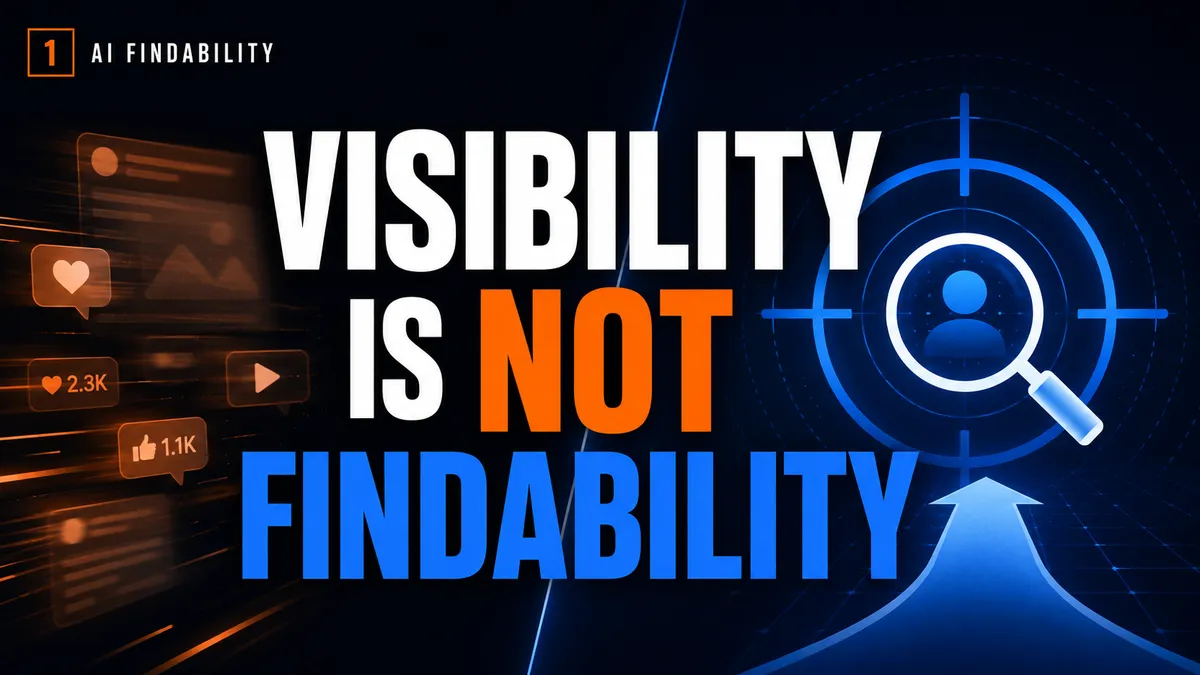
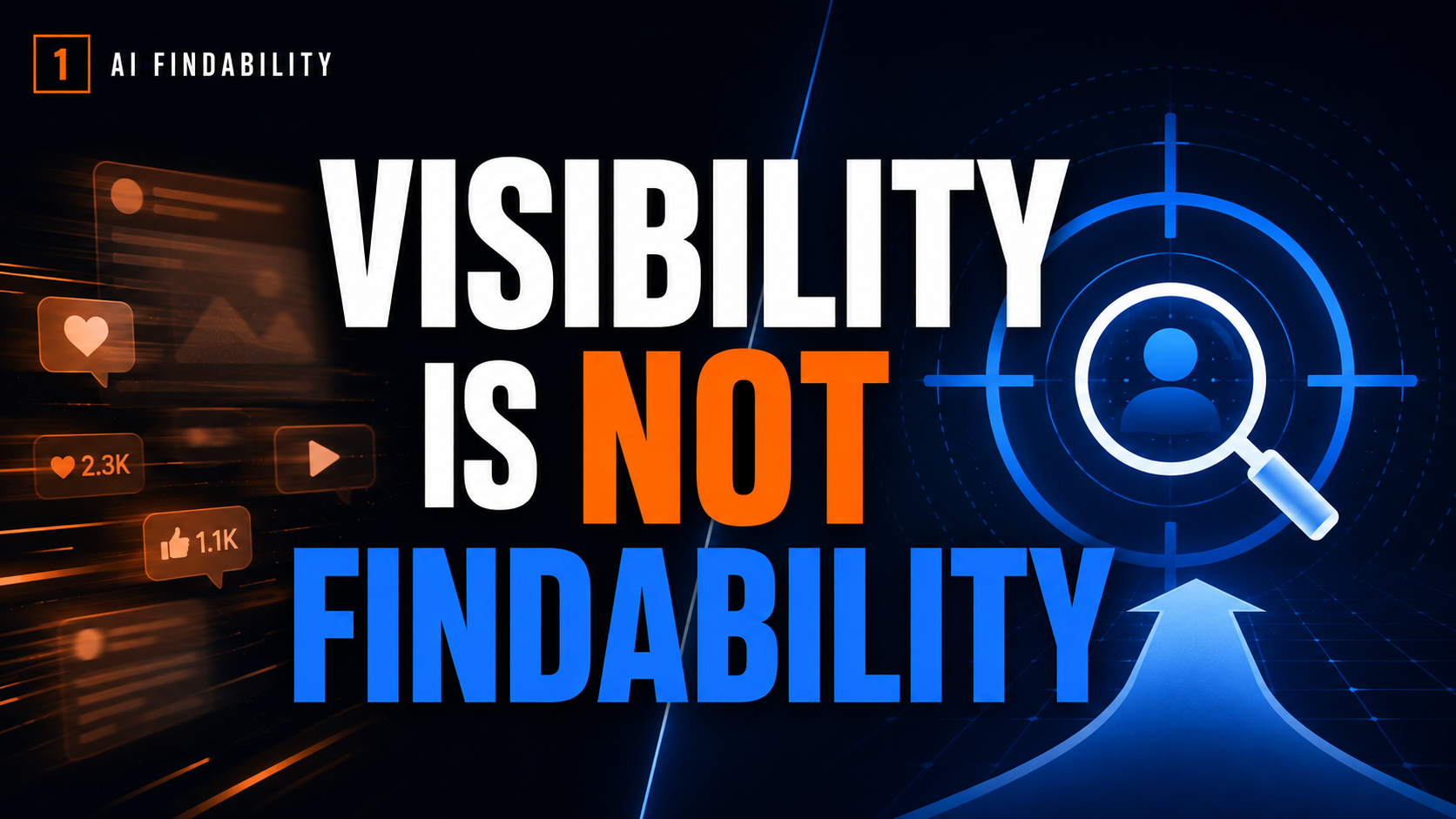
Visibility means people see your content. Findability means search and AI systems understand your expertise well enough to connect you with a buyer’s question.
That distinction matters because buyers are increasingly using AI tools to research experts, compare options, and create shortlists before visiting a website.
For years, digital marketing trained us to chase visibility.
Post more. Rank higher. Get more reach. Build an audience. Get the click.
None of that suddenly stopped mattering.
But there is now another layer between you and the buyer.
AI.
A prospective client can ask ChatGPT, Gemini, Perplexity, or another AI tool:
“Who should I hire to help me with this?”
And instead of giving them ten blue links, AI may simply give them a shortlist.
The important question becomes:
Are you on it?
What Is the Difference Between Visibility and Findability?
Visibility is temporary attention.
Someone sees your LinkedIn post.
They watch one of your videos.
They notice your name in a feed.
Findability is different.
Findability means your expertise can be connected to a relevant problem when someone actively goes looking for help, even if that person has never heard your name before.
That is a much more commercially useful test.
You can have thousands of followers and still be difficult to understand.
You can have a polished website and still be hard to categorize.
You can have decades of experience and still be missing from the answer when a buyer asks AI who they should consider.
A million impressions ain't gonna help much if nobody understands what you are the obvious choice for.
Why Does AI Findability Matter?
AI search has an understanding problem.
Before a system can reasonably connect you with a buyer question, it needs enough public information to understand:
what you do
who you help
what problems you solve
what you are known for
why your expertise is credible
If your public footprint is vague or contradictory, that connection becomes harder.
Your website says one thing.
Your LinkedIn profile says something slightly different.
Your YouTube channel covers twelve topics.
Your bio sounds like it could belong to half your industry.
You may see versatility.
The machine sees a filing cabinet somebody kicked down the stairs and all the files scattered everywhere.
So What Should Your "Digital Footprint" Communicate?
A strong digital presence should consistently answer three questions:
1. Who do you help?
“Business owners” is usually too broad.
“Established consultants selling high-trust services” gives both people and machines a much clearer signal.
2. What do you help them achieve?
A category is not an outcome.
“AI consulting” tells someone what shelf you sit on.
“Helping experienced experts become easier to find, trust, and choose in AI search” tells them why they should care.
3. Why should they trust you?
This is where visible proof matters.
Experience.
Results.
Case studies.
Books.
Speaking.
Research.
Client outcomes.
Interviews.
Published expertise.
Your experience has to leave your head (and your hard drive) before buyers or machines can use it.
Does More Content Improve Findability?
Not automatically.
More content can actually make the problem worse if every piece sends a different signal.
The goal is not to publish constantly.
The goal is to create a recognizable pattern.
Your website, LinkedIn profile, articles, video content, podcast appearances, and other public profiles should reinforce roughly the same positioning. (Not easy for creative entrepreneurs!)
But that's how association is built.
Not through volume.
Through consistency.
What Should You Do First?
Run a basic consistency check.
Look at your homepage.
Can a stranger tell who you help in ten seconds?
Now check LinkedIn.
Does the headline reinforce the same audience and outcome?
Look at your recent articles and videos.
Do they support the expertise you want to be known for?
Then ask the harder question:
If somebody asked AI what I am known for, would I like the answer?
If you're not sure, that is worth fixing before you crank out another hundred pieces of content.
How Findable Are You?
I created the free Impossible to Ignore Assessment to help you find out.
In about five minutes, you’ll get:
Your Relevance Score
Your strongest advantage
Your biggest visibility leak
Your weakest pillar
One specific next move
Complete the assessment and you’ll also get the full AI Findability Playbook.
Take the free assessment:
https://impossibletoignore.me/
About Lou Bortone
Lou Bortone is an AI Video Marketing Strategist, Certified AI Consultant, author and speaker who helps established experts, consultants and business owners use AI and video to become more visible, trusted and chosen.
Before moving into digital marketing, Lou spent more than 20 years in television and entertainment marketing. Today, he combines that experience with practical AI strategy to help experienced professionals strengthen their authority, improve AI findability and stay commercially relevant as buyer discovery changes.
Refuse to Be Irrelevant. Become Impossible to Ignore.